

For All, Into the Starfield
The wonder is, not that the field of stars is so vast, but that we have measured it
It’s obvious to anyone who both enjoys video games and uses social media that console wars are very real and very toxic. As the vitriol between PlayStation and Xbox fans continues to ramp, many games, usually console exclusives, get caught in the crossfire between fans devoted to a certain brand and those who have seemingly sworn a Hunter’s oath to oppose them. Often that leaves targeted games in the lurch. Staunch defenders overzealously protect the honor of their favorite console exclusives from trolls whose organizing principle is to extoll the virtues of a competing platform. Throw in some smear campaigns, often incited without ever playing said game, the debate over review scores, and the inevitable nitpicking that tends to happen even with games we actually enjoy, and it’s impossible to tell what’s what.
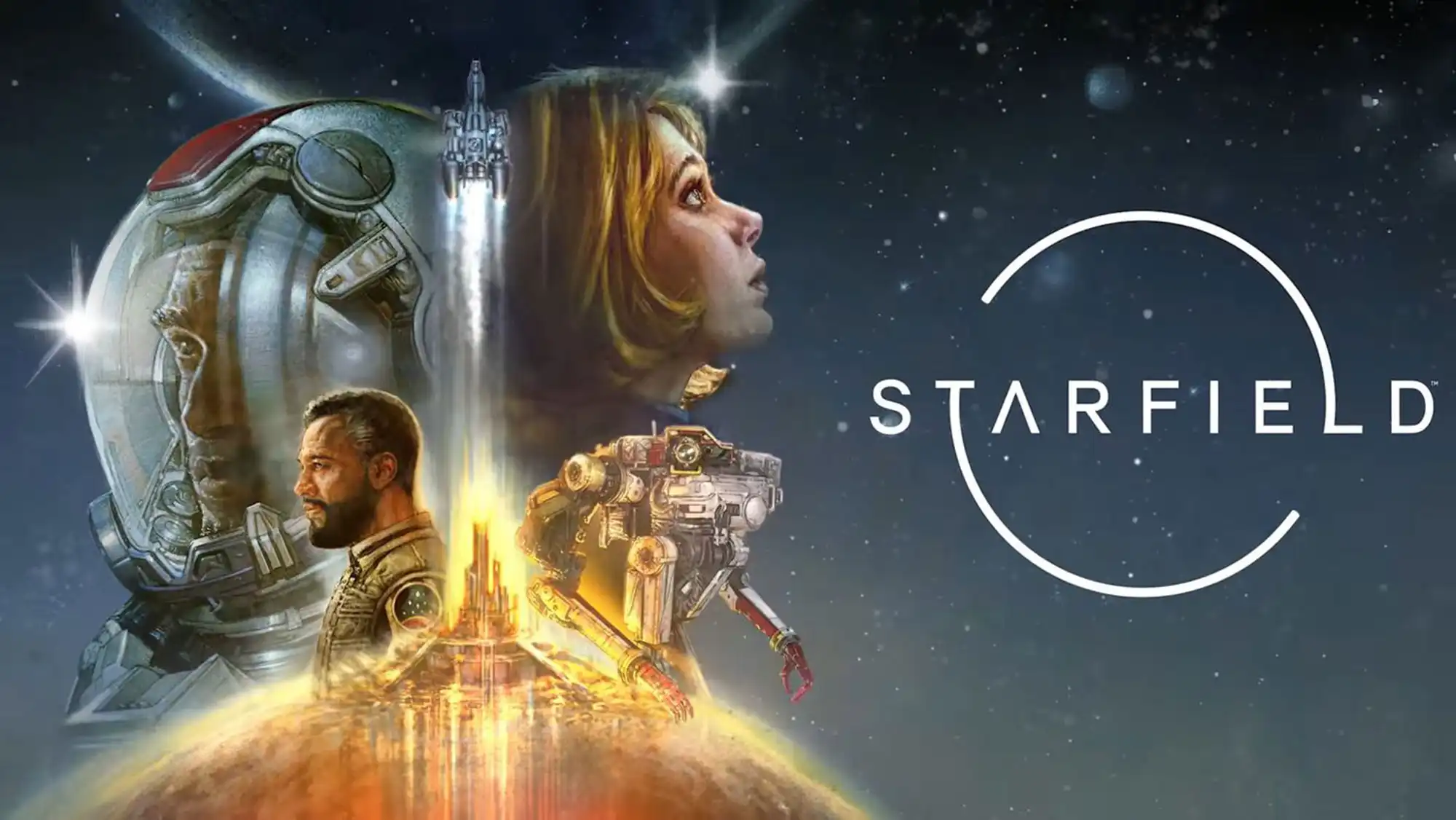
Starfield, the newest game from Bethesda Games Studios, and their first new IP in 25 years, has become (at least online) the poster child for the polarized gaming community. People love it, people hate it, everyone has an opinion. For our purposes, let’s just forget all the hype for a moment and focus on the game. I’ll start by asking the most important question. Is Starfield any good?
Well, in my humble opinion, yes. It’s very good.

Starfield is a NASA-punk inspired game set several centuries in the future as humanity sails among the stars, colonizing new worlds long after earth has become mysteriously uninhabitable. Years before the start of the game, humanity broke off into factions after a civil war knows as the Colony Wars. The player starts off as a miner on one of the many planets in Starfield’s universe who uncovers a buried artifact, the discovery of which kicks off the main narrative. The story revolves around the search for these mysterious artifacts and brings you into the fold with a secretive group of explorers known as Constellation. The search across the galaxy for these artifacts brings players into contact with the various factions that have sprung up after the war, complete with different agendas and competing philosophies.
I won’t go into spoilers here, but I found the storytelling to be engaging and exciting. I always found myself wanting to learn more about this universe and uncover it’s mysteries, whether it be the secrets each of the games factions keep or grander secrets like how or why humanity is where it is. The narrative twists may feel familiar and were clearly inspired by some of your favorite current media, but the influences are numerous. Starfield lifts narrative beats from an array of movies ranging from Interstellar, Space Odyssey 2001 to recent Marvel movies and even games from other studios like BioWare’s Mass Effect. There are some rough spots, but all in all, it’s a thrilling story that kept me interested in the main quest as I found myself wandering from side adventure to side adventure.

Much has been made about the procedurally generated planets, but that does a disservice to what Bethesda actually achieved here. The amount of hand-crafted content is absolutely staggering. From tons of side quests to unique storylines for each individual faction, after 70 hours with Starfield, I feel like I barely scratched the surface of the universe it presents. And honestly, that’s OK. Sometimes more is just more but with Starfield, more may mean running a different faction quest line that is entirely different from the others, or allowing you to just build outposts, mine resources and explore.
The feeling that you actually live in this world is a testament to how immersive it can be and there’s something here for every interest. After the main quest is complete, the fun continues, and not just in a play-it-again Sam kind of way. Without spoiling it, the NG+ mode that becomes available after the ending of the main story provides ample opportunity to see and do it all, with a clever hook that I would love to see more NG+ content replicate in the future.
Visually, the level of environmental detail is astonishing. Cities feel detailed and rich, new planets feel different and alien, and all of it holds together very well at a locked 30 fps on Xbox (the platform I played on). That said, like other Bethesda titles, the character models could be more dynamic, the AI occasionally gets goofy, and I found that the lack of display settings (which were recently announced for a future patch) left everything with a washed out sheen, almost like an overexposed picture. This is most noticeable inside of buildings and when exploring cities, but none of it I found too distracting.

As for gameplay, Starfield has some bits that felt pedestrian and others that felt revolutionary. Combat presents mostly as a run-of-the-mill shooter. There is a large variety of weapons and ammo but curiously none of it can be crafted. That seems like an odd choice in a game all about exploration and discovery. The inventory management system is much-maligned and for good reason, but nothing that I found too difficult to navigate after a few hours. The shipbuilding mechanic is solid and there are short segments of space flight where you can engage in combat, and it made me feel like I was in a Star Wars simulator in Disneyland.
One of the areas where Starfield really shines, and honestly not enough has been said about this, is its perspective changing mechanic. You can shift perspectives from first person, to third, to third over-the-shoulder on the fly. This is not the first game to include this option, not even the first Bethesda game, but the implementation here is as seamless as can be. As someone who likes FPS but gets motion sick easily, I found it was exciting to explore and interact in third person then fast shift into FPS for combat. Seriously, this is remarkable. Seeing this system in action makes me long for something similar in other games. It provides for a rich gameplay experience and lets you play how you want when you want. Overall, I love it.
Most people will tell you this is a “Bethesda” game. Basically, Skyrim set in space. It is, but it’s more than that. It takes risks. A lot of risks. Not all of them pay off, but you have to applaud the effort. One of the risks I felt did pay off was the “openness” of the spaces in which you travel, especially on the planets not containing major cities or settlements. When Captain Kirk himself, the indubitable William Shatner, famously journeyed into space he explained how he was overcome with a sense of loneliness and despair. This is something called the Overview Effect. A feeling of isolation and loneliness that can occur when someone views the world from above and can see it as only a small part of the universe.

Amazingly, I’ve heard people describe their experience with Starfield in similar terms. Bethesda didn’t artificially populate the worlds with lots of settlers, or make them teeming with life alien. Most are barren wastelands that can only be traversed with a spacesuit. You can walk and walk and walk and not see a single thing that isn’t part of the geographical make-up of the planet you’re on. Only 10% of the over 1000 visitable planets have any form of life. That feeling of emptiness was deliberate. Bethesda was clearly trying to be as authentic as possible within the framework of a video game that still needs to rely on action and adventure. In my experience, Starfield’s experiment here succeeds and then some.
A lot of love and care went into making this game, and you can certainly tell. There are, of course, several day one glitches, but for the most part, it’s the most “complete” Bethesda game at launch I’ve ever seen. That said some of the bugs can be distracting. I encountered one during the “A High Price to Pay” quest where I was supposed to engage Walter but was unable to bring up the conversation menu. Luckily it didn’t break the quest but I did have to play through the ending a second time because the game crashed during the credits (this is made more embarrassing by the fact there is a “skip” option when the credits roll). Still, nothing so bad as to diminish the experience.
And that’s the best way to describe it: An experience. Most people want to nitpick every detail or list all the ways a game failed to meet their expectations. For me, I prefer to judge a game by how invested I get. Does playing feel addictive, or does it feel like a chore? Do I want to do as many side quests as I can to fully experience a game, or do I want to mainline it straight to the end and move on? As an experience, I’d say this is one of the more enjoyable ones I’ve had in years, and that’s saying a lot in an RPG market that recently has been an embarrassment of riches. The game is fun, and at 70 hours, I want to keep playing. That tells me everything I need to know.
|
|
Review Score: 9/10 – Excellent
*All images taken by author during play through*
Leave a Reply