
A Dream Within A Dream
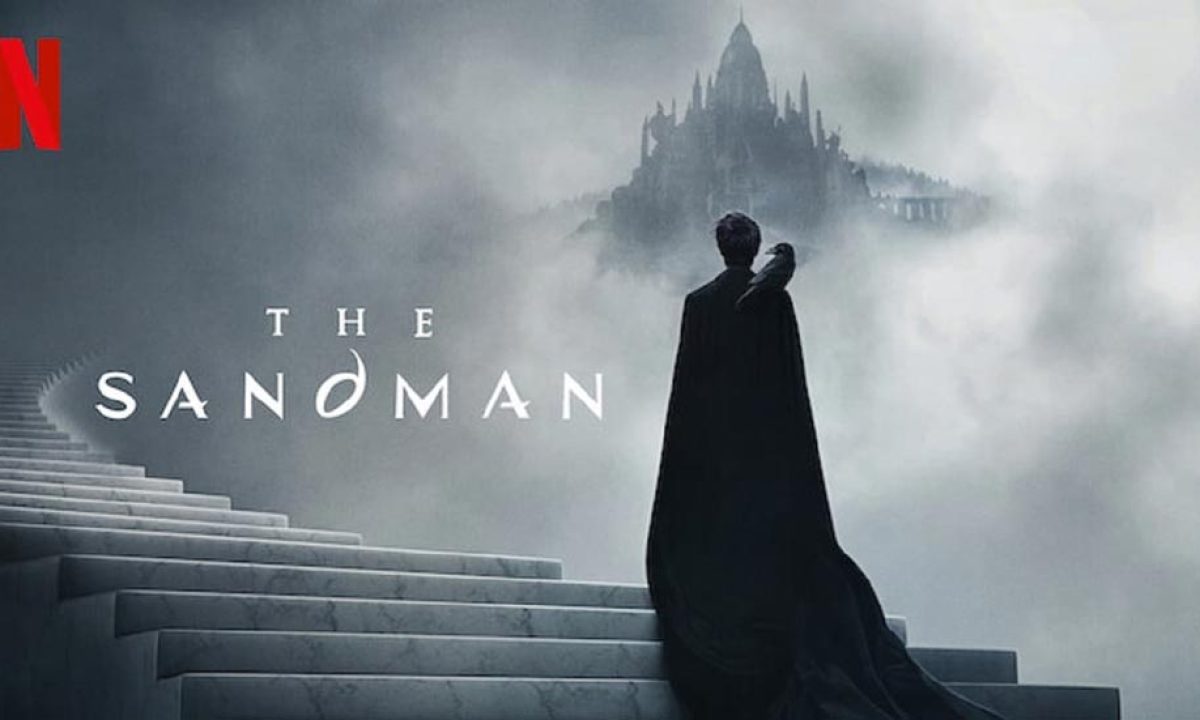
This is not a review in the traditional sense. I’m not an impartial observer looking to make broad, and possibly dispassionate, observations about the Netflix adaptation of the seminal Neil Gaiman comic series The Sandman. I won’t be using a rating system or a list of indicators to assess quality.
Here’s my disclaimer: I’m an avid fan of the comics. Fair enough?
It is, simply put, a literary masterwork that (along with other works such as Alan Moore’s The Watchmen), helped to elevate comic books above the pulpy (and sometimes pedestrian) writing that they were generally known for. Not that there is anything wrong with comics. I happen to love them. Reader appetites have shown there is plenty of interest in lighter, flashier fare.
Superheroes spawned an entire genre unto itself, and comics are squarely to thank for that. But a visual medium such as comics always had the potential to tell truly compelling stories with literary merit. These I like to think of as “Comicbooks” (all one word, as the immortal Stan Lee once explained). The Sandman may not be the first Comicbook with true literary aspirations, but it certainly stands among the best.
The Sandman is a dense, complex and interlocking tapestry of high-quality storytelling. It surprises and diverts expectations in every new story, while also folding back in on itself as one grand, interconnecting narrative. It’s not exactly light reading. Likewise, it has inspired a generation of excellently crafted literature told through the visual medium of comics. Some of my personal favorites, like Majorie Liu’s Monstress or Mike Carey’s Unwritten, owe a debt to Gaiman and Sandman.
The Sandman stretched the borders of what a comic could be, in much the same way that the Dreaming stretches the boundaries of our walking world. I love the source material, and I was cautiously optimistic on how well Netflix, and Gaiman himself as a producer, would handle a story that many had considered unadaptable. Fortunately, for us, they by and large succeeded.
That success is due in no small part to the format. By adapting it as an episodic television show, it allowed room for various individual narratives to have the required room to breathe. It ran just enough connective tissue throughout to make it intelligible to the audience, much like the comic itself.
The comic branches Morpheus’ imprisonment into a search for his missing artifacts, which leads into a storyline about a dream vortex that ties together places and characters of importance to current and future stories. The show takes a very literal approach to the adaptation in this regard, instead of reworking the narrative into a more viewer-friendly format. Neil Gaiman had been notoriously reticent for anyone to adapt The Sandman before, and I assume this very challenge was the reason.

From what I’ve read of Gaiman’s own comments on the matter, it seems he was holding out for just this opportunity. An opportunity to create non-linear storytelling with a sizable budget that didn’t condense a universe’s worth of stories into a two-hour movie. To fully appreciate Sandman, you can’t simply be told the story: you must be shown it. You must see how it weaves its spell across time, space, other realms and a vast amount of supporting players.
It’s a staggering amount of content needed just to provide enough context to drive home the story beats. That’s because in the end it’s not really a story about Morpheus the Dream-King, Dream of the Endless. It’s a story about dreams themselves. The fertile worlds they create in our minds, how they change our reality and, ultimately, the realities of all.
Every piece of the show, down to the set construction and musical score, seem to be a deliberate choice. I believe this is the Sandman that Neil Gaiman saw in his mind as the artists drew their panels from his scripts all those years ago. Dave McKean, the original cover artist, came out of retirement to work on the show. There was a clear commitment to make the characters and the sets not just look but feel like the stories from the comics.
The result is the world of The Sandman come off the page and into your living rooms. Everything is loving created or re-created from the stories in a way that both pays homage to the artwork, but also modernizes and breathes a reality into everything that a live-action adaptation would require.

Of course, where the adaptation truly succeeds is in the casting. Tom Sturridge plays Morpheus so adeptly it comes across almost effortless, as if he has always been Morpheus. Gwendoline Christie’s casting as Lucifer got most of the pre-release attention, due mainly to gender-swapping of a pivotal character and all the ridiculous backlash that usually entails. Rest assured, in action it seems to be a natural choice. The Lucifer of Gaiman’s comic wasn’t the debonair, wise-cracking sex-fiend that Tom Ellis so deliciously portrayed in the Lucifer spin-off show.
The comic Lucifer was beautiful, an angel of the Silver City, but with menace quietly roiling beneath that calm and angelic exterior. There is an androgyny to the Lucifer of Gaiman’s Hell, and that’s to say the gendering of Lucifer is irrelevant. Lucifer is an immortal entity that has existed since the dawn of time. A Being even more powerful than Dream of the Endless, as Dream himself notes. Christie’s Lucifer has a genteel smarminess that immediately signals to viewers the danger Dream is in. Perhaps in lesser hands this could be seen as stunt casting but here, and certainly now, it works wonderfully.

The rest of the cast also makes the most of the material. Jenna Coleman is delightfully roguish as Johanna Constantine, creating a fun dynamic with Dream that echos a few of the best Clara Oswald/The Doctor moments from her time on Doctor Who. Everyone, from David Thewlis as a more grounded and perhaps more complicated Doctor Destiny to Tywin Lannister himself, the ineffable Charles Dance as Rodrick Burgress the man who sets the first bevy of stories in motion, brings their A game.
Stephen Fry as Gilbert is an inspired piece of casting that really gave weight to the final Fiddler’s Green revelation, something I found a bit more profound in the show than the comic. Newcomer Kyo Ra shoulders a lot of narrative weight as the dreaded Vortex, Rose Walker, in a role that signals she’s a major up-and-coming talent and John Cameron Mitchell simply slays as Rose’s friend and housemate Hal Carter.
The casting of the Endless is equally solid. Kirby Howell-Baptiste plays fan-favorite Death of the Endless with all the charm and aplomb you would have hoped for. Boyd Holbrook likewise gives a chillingly convincing performance as the Corinthian and, I say this as a credit to his acting, comes across believably as the guest speaker at a serial killer convention. That said, as good as everyone is top to bottom, the best may be Mason Alexander Park’s Desire. Desire only has a few minutes of screen time, but in those brief moments absolutely steals the show right out of Morpheus’ sand-filled hands.
Fans of the comics know how integral Desire of the Endless is to the story and Dream’s fate, which I won’t spoil here. Park chews the scenery in a way that actually manages to elevate a character that was already interesting on the page. When Desire welcomes Dream into their realm for their first true tête-à-tête, I literally got goosebumps. I hope we get more seasons, if only to see that dynamic (and all the Endless and their petty interplays) fleshed out further on screen.
While watching the first season, the one thing I kept coming back to was how many Easter eggs there were for those who were familiar with the source material. I paused on a scene where Barbie, in her princess persona, rode with Martin Tenbones, a dog-like creature that serves as her vassal and looks like something straight out of Dr. Seuss. I loved when they name-dropped the Cuckoo (one of my favorite storylines from the comics). And that brings me to the only criticism I had, though it’s also something that I fervently lauded as I watched: It’s a bit confusing if you’re not actually familiar with The Sandman stories.

It’s obvious when you see Barbie and Martin Tenbones that there’s something going on there, but what exactly is unclear. It’s a tactic that could pay dividends in future seasons and will certainly demand astute viewers to rewatch the previous seasons before a new one drops. However, it could prove needlessly confusing to viewers unfamiliar with the comic book.
There is a surprisingly steep learning curve at play. I assumed going in, the narrative would have been smoothed out a bit more for casual viewers unfamiliar with Gaiman’s work. It’s maybe a smidge more expository than the comics, but not much. Frankly, it’s something that I absolutely loved about the show. As a long-time fantasy fan, especially of Neil Gaiman’s work, I wanted a show that rewarded my fandom, and that’s precisely what I got.
There is a lot more ground to cover here if I was so inclined. Everything from how fantastically they adapted Dream of A Thousand Cats to the impressively adept way they handled the Calliope story for a modern audience. There simply isn’t room enough on the page. It should be noted, an annotate version of the comics with liner notes was recently released. The notes describe the vast number of references the work contains. In that respect, I’m wont to liken The Sandman to T. S. Elliot’s The Wasteland; a work best enjoyed in context of the numerous allusions to other works of myth and history it contains.
For that reason, the inaccessibility of the tv show seems the most earnest course for adapting the story. It’s clear this is the version that Gaiman wanted made. It’s also the version I, and many other fans, wanted made. With an official order for more episodes, here’s hoping we one day get to see the Orpheus story told, along with some of the brilliant one-shot stories. Ramadanand Augustfrom the book Fables & Reflections are two I would love to see get the same treatment as Dream of a Thousand Cats and Calliope.
In conclusion, The Sandman on Netflix is a worth adaptation that made few sacrifices to realize its grand vision, and we as viewers are all the better for it.
Leave a Reply